
Home Battery Storage Installation in Montrose
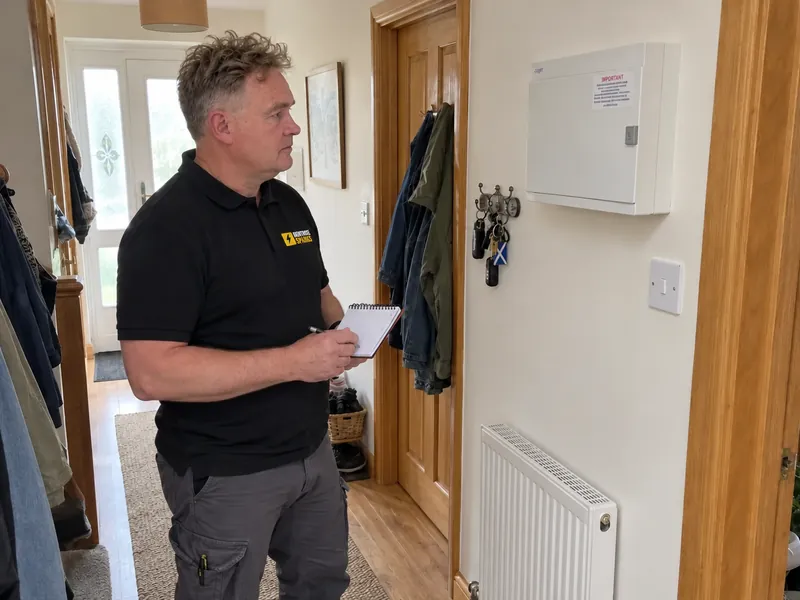
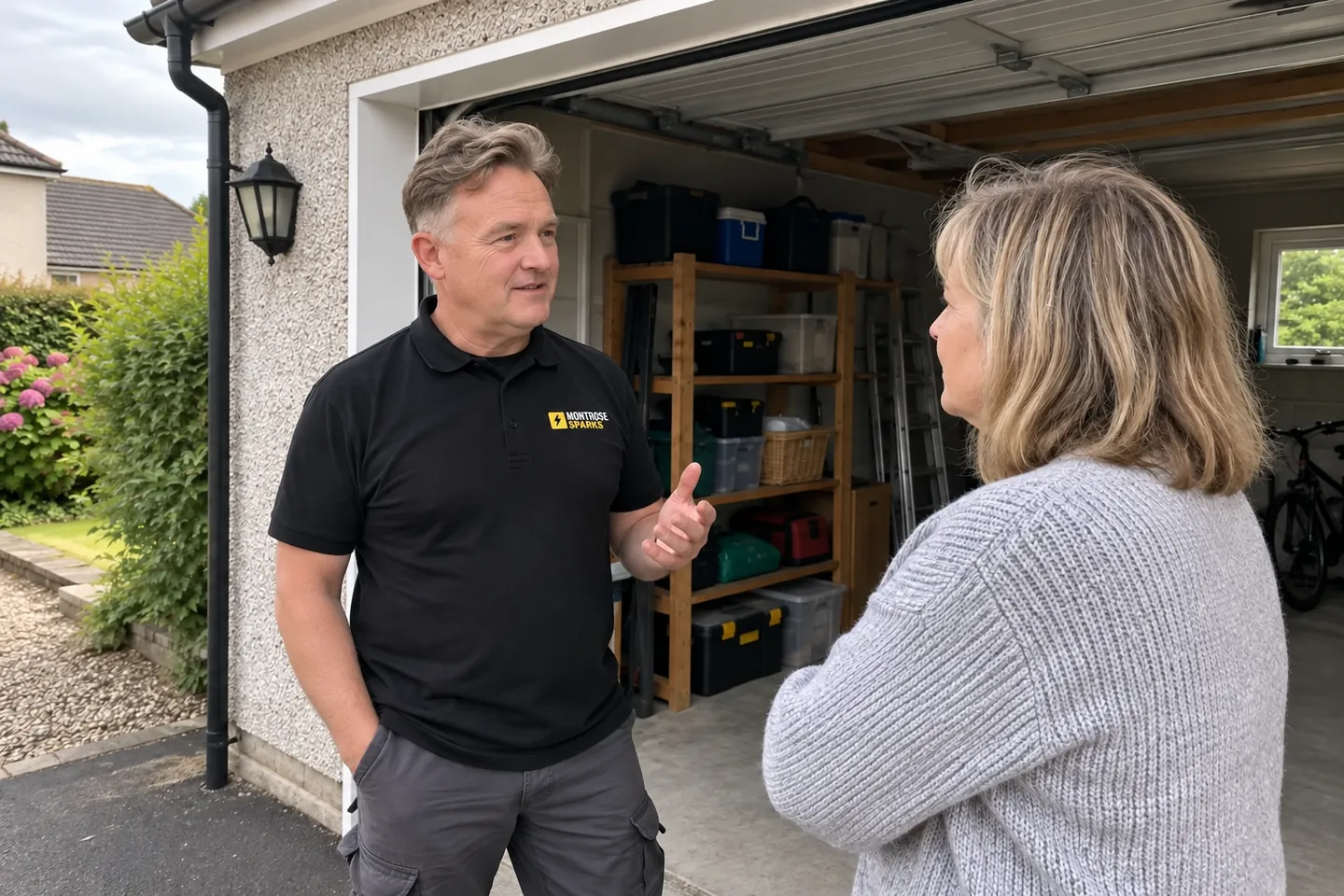
Find out whether a battery suits your home and the way you use electricity. James looks at the proposed equipment and the existing installation before he talks about how it could be installed.
Call 01674 900550James answers · 24/7 for emergencies- Solar and inverter compatibility checked first
- Backup power only where it is designed in
- Location assessed, not assumed
- Costs agreed before work begins
 18th EditionBS 7671 Qualified
 City & Guilds2382-22, Level 3
 Fully InsuredFor Electrical Work
 RAF ElectricianElectrical Engineer
 Ex-Retained FirefighterFire & Rescue Service

Home Battery Storage in Montrose, Angus
Montrose Sparks is James Leslie, based in Montrose. He assesses battery storage for homes in the town, in Ferryden and Hillside and across the approximate 40-mile radius he covers, from newer houses at Borrowfield to farmhouses with a roof full of panels.
A battery is planned around what the house already has: an existing solar PV system and its inverter, an EV charger that changes how much power the home draws, and a consumer unit that may need altering to take the new circuit. James reviews the proposed equipment and the existing installation before discussing an installation approach.
5/5 on Google Reviews
“He took great care over the work (even used a spirit level to make sure the cooker was sitting right!) and was very reasonably priced. We are new to the area and struck lucky finding a reliable, responsive electrician.”
“Great service, fast response and problem fixed quickly”
“Great service highly recommended.”
“Jamie arrived within 15 minutes of my call and had the power back on about 10 minutes later.”
“James was very polite and sent over the quote immediately after the call and came out the same day in the early evening.”
“He couldn't of been more helpful and still only took what he quoted for, even though it was a bigger job than expected. Definitely recommend.”
“Arrived within an hour of my call, as he said he would. Fixed the problem same afternoon, and rate was extremely reasonable!”
“They also give decent price for the job and the work done will be using James again, he is also very polite and very helpful too me.”
“Fast response during a weekend, put in a temporary fix so we got power back. Excellent service.”
“Very professional and courteous. Highly recommend him.”
“James answered my call late at night and went to my property to investigate even though I had never used him before.”
Why Choose Montrose Sparks for Home Battery Storage?
- Montrose Sparks assesses and installs home battery storage across Montrose, Angus
James reviews the proposed equipment and your existing installation before discussing how a battery could be installed. He is based in Montrose and serves homes, farms and businesses across Angus and surrounding areas within approximately 40 miles.
- Work is carried out to BS 7671 by an 18th Edition qualified electrician
The planning discussion covers any required network application or notification, the isolation arrangements and the installation records.
- You deal directly with James Leslie, not a call centre
Your call goes to James Leslie in Montrose. He is a former RAF electrical engineer and former retained firefighter with 40 years of electrical engineering experience. Small jobs are welcome, and he explains the work clearly and agrees the cost before starting.
- Montrose Sparks is fully insured and locally based
The business carries public liability cover for domestic, commercial and agricultural properties. Costs are agreed before any work begins.
Power cuts and suitability
Will a Battery Keep My House Running During a Power Cut?
Not every system provides backup power. Any backup function, supported circuits and additional equipment need to be specifically designed and included in the agreed work. These are the four things James checks before quoting.
Solar compatibility
Existing solar systems may use a compatible hybrid inverter or a separate AC-coupled battery arrangement. The exact equipment must be checked together.
Installation location
Battery location, access, manufacturer clearances and fire-safety considerations form part of the assessment; an available cupboard is not automatically a suitable location.
Backup and network requirements
Backup during a power cut is a separate design requirement. Confirm which circuits need support and for how long. Any required network application or notification, isolation arrangements and installation records are included in the planning discussion.
How you use electricity
The useful capacity depends on when you use power, the equipment you want to supply and the system’s charge and discharge limits. James discusses these requirements before recommending an installation approach.
Battery With Solar PV, or Battery Charged From the Grid?
A battery can store electricity from a compatible solar installation or charge from the grid on a suitable tariff. Which arrangement applies depends on what is already installed and how you use power:
Option one
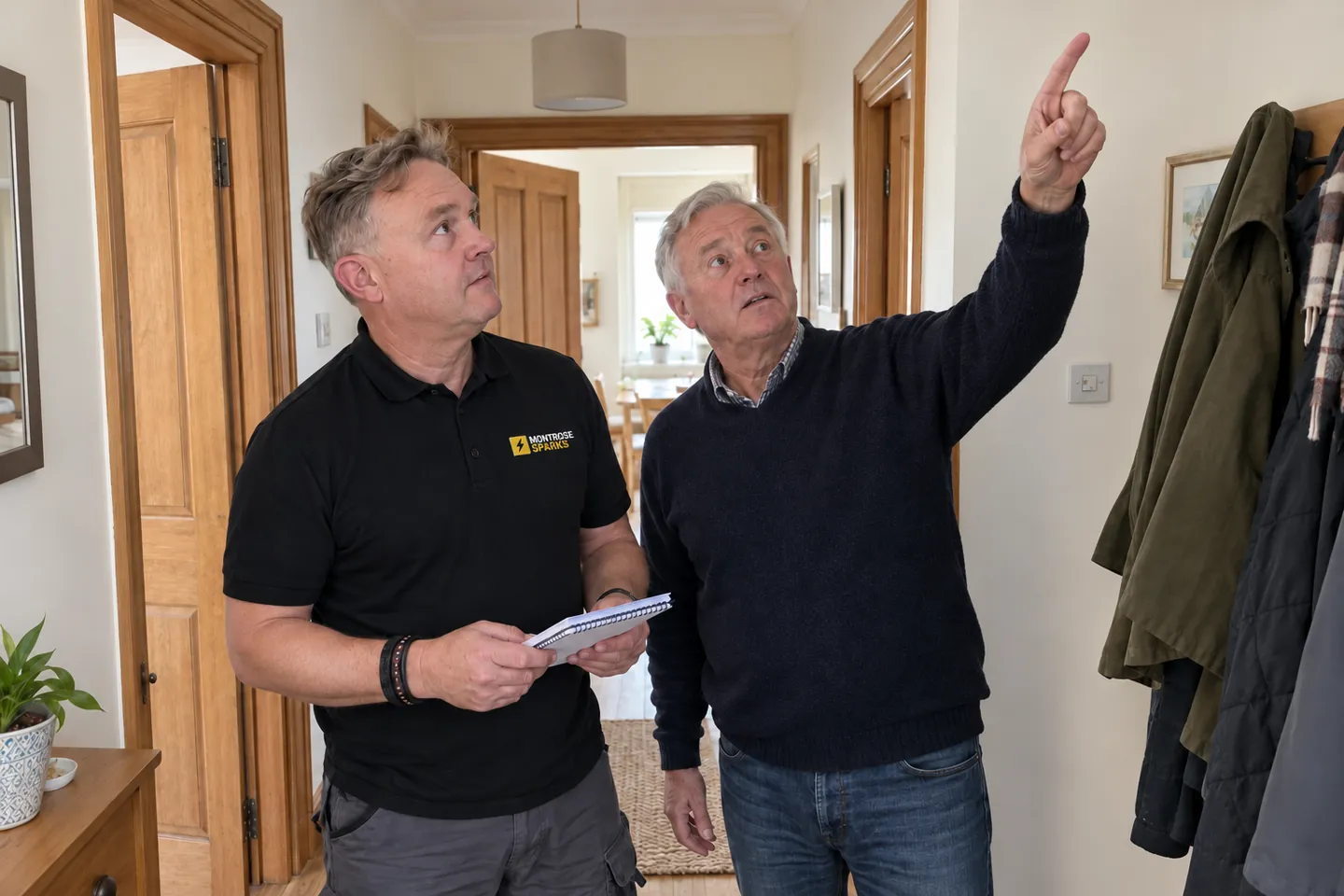
Battery with existing solar PV
Existing solar systems may use a compatible hybrid inverter or a separate AC-coupled battery arrangement. The exact equipment must be checked together.
Send the make and model of the existing inverter and panels, and any proposed battery, so the combination can be reviewed before an approach is discussed.
Best when: a solar installation is already in place and the inverter and battery can be confirmed as compatible.
Option two
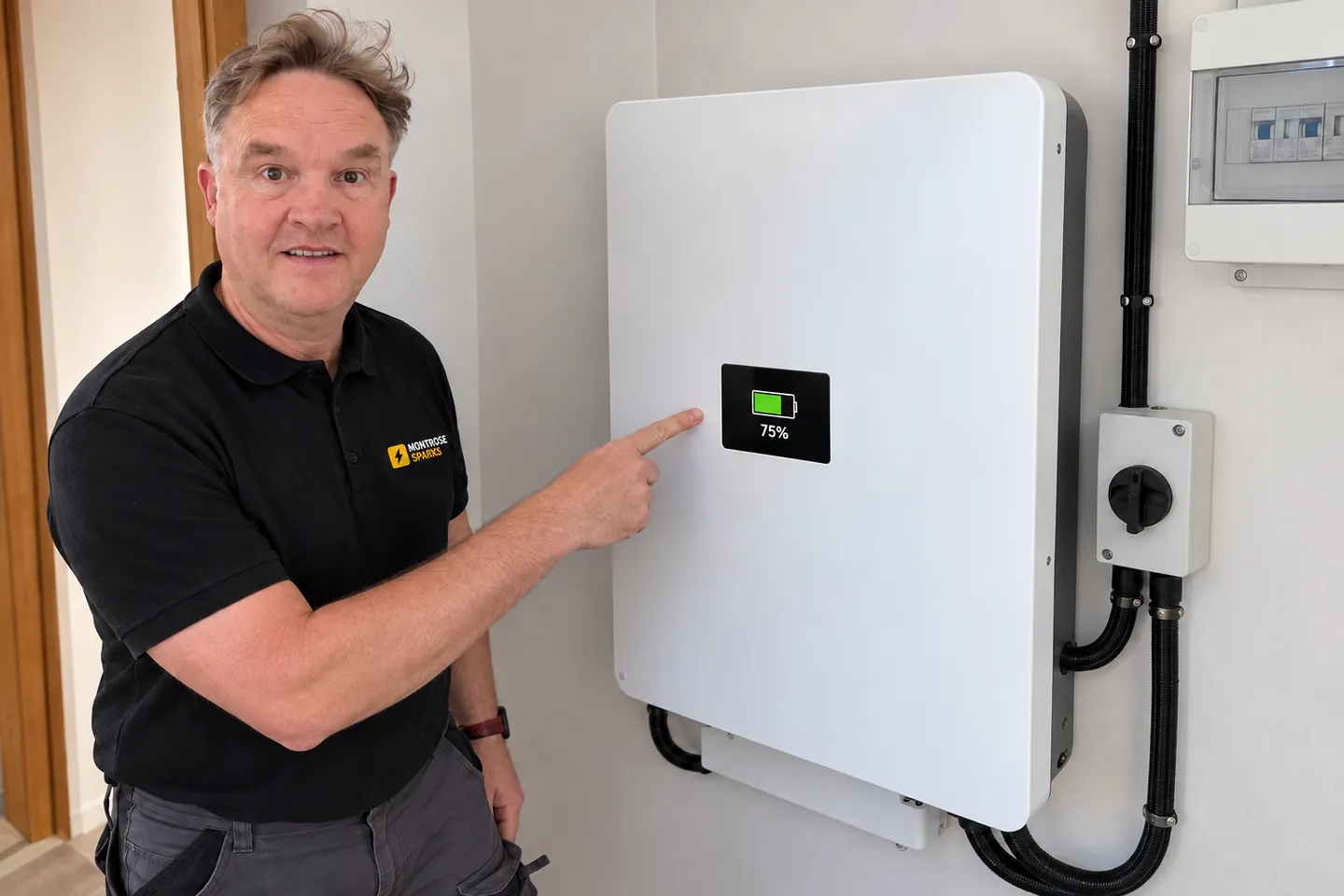
Battery without solar (tariff charging)
A battery can store electricity from a compatible solar installation or charge from the grid on a suitable tariff. The useful capacity depends on when you use power, the equipment you want to supply and the system’s charge and discharge limits. James discusses these requirements before recommending an installation approach.
Whether grid charging is worth doing depends on your tariff and the system’s settings, so tell James which tariff you are on and when the house uses most power.
Best when: there is no solar PV, and your tariff and the way you use power make storing grid electricity worth discussing.
In either case, backup during a power cut is a separate design requirement. Confirm which circuits need support and for how long. The three main parts of an installation are shown below.
Wall-mounted battery
Fixed where location, access, manufacturer clearances and fire-safety considerations allow, close to the consumer unit where possible.
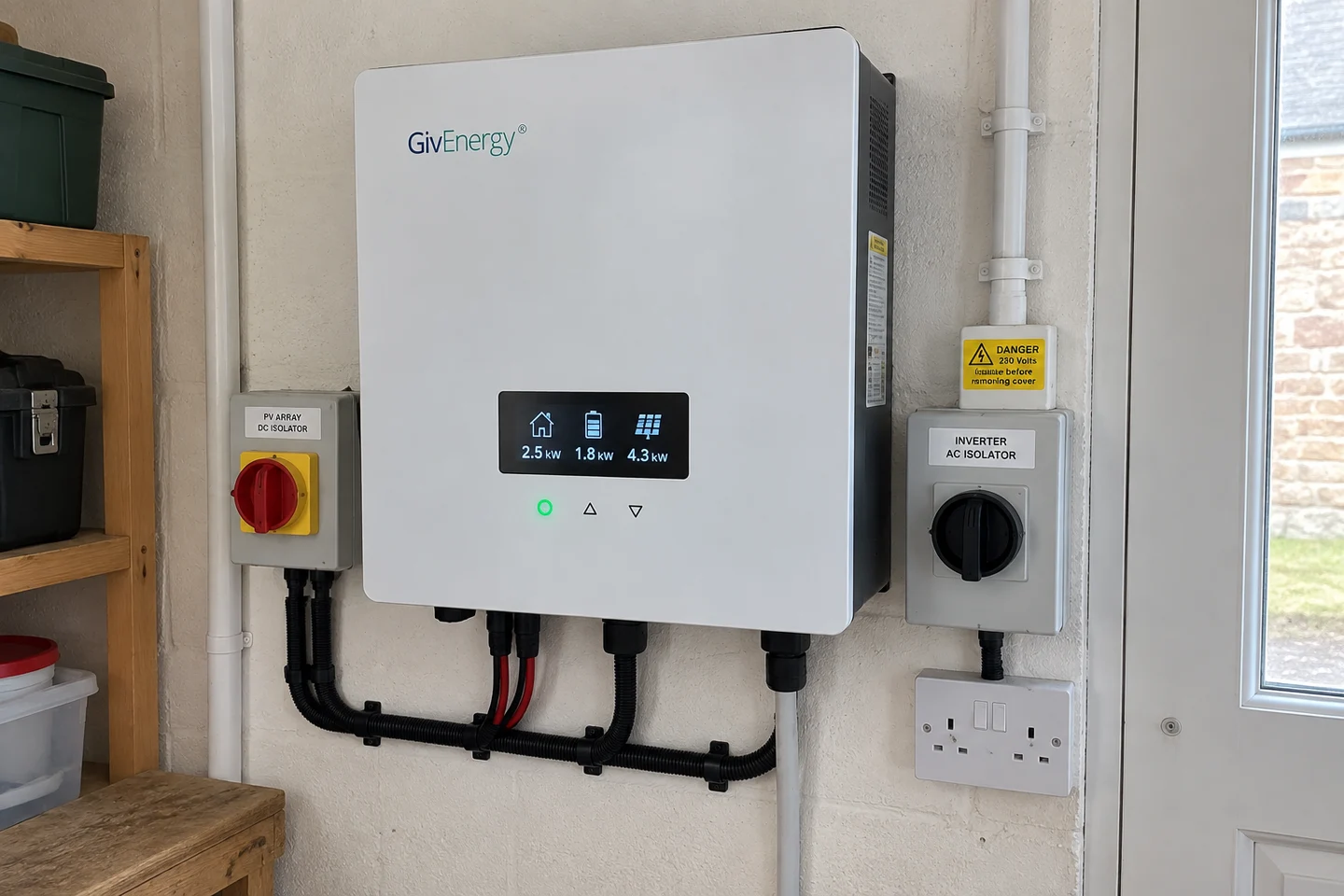
Hybrid inverter
Controls the battery and, where the existing solar equipment is compatible, the panels too; otherwise a separate AC-coupled battery arrangement may be used.

Backup changeover arrangement
Only where a backup function has been specifically designed and included in the agreed work. The supported circuits are confirmed at the design stage.
How Is Battery Storage Priced?
There is no standard price for a home battery: the equipment, the location and any backup requirement all change the scope.
Quoted after assessment
Quote agreed after assessment. The equipment, access, investigation needed and extent of installation or repair affect the price.
Costs agreed before work begins
James explains the proposed work and any additional costs before you agree to proceed.
Usefulness depends on the system and tariff
Storage capacity, operating settings and the chosen tariff all affect the usefulness of a battery. Discuss ventilation, location, solar equipment and any backup expectations before choosing a system.
What to Send Before an Assessment
Share recent electricity usage, your tariff, solar and inverter details, photographs of the proposed location and any backup requirements. These help establish the scope, but a site assessment may still be needed before a firm quotation.
Recent electricity usage. A recent bill or a screenshot from your supplier’s app is enough to show when the house uses power.
Your tariff. The tariff name and any off-peak window, if you have one.
Solar and inverter details. The make and model of the existing inverter and panels, or the equipment you are considering.
Photographs of the proposed location. The wall or space you have in mind, plus a photo of the consumer unit and the meter position.
Any backup requirements. Which circuits you would want to keep running in a power cut, and for how long.
What Does a Home Battery Installation Involve?
The order of work is the same whether the battery pairs with solar or charges from the grid: assess, design, install, commission and hand over.
- 1
Assess the supply, consumer unit, location and any solar
James reviews the proposed equipment and existing installation: the incoming supply and consumer unit, the proposed battery location with its access, manufacturer clearances and fire-safety considerations, and any existing solar inverter. The exact equipment must be checked together.
- 2
Design the system and any network operator notification
The design confirms which circuits, if any, need backup support and for how long. Any required network application or notification, isolation arrangements and installation records are included in the planning discussion, and the scope and cost are agreed before work begins.
- 3
Mount and connect the battery and inverter
The battery and inverter are fixed in the agreed position and connected to the installation on a suitably protected circuit, with isolation arranged so the equipment can be switched off safely for maintenance.
- 4
Commission and configure backup only where designed in
The settings are configured for your tariff and any solar, and the system is tested. Not every system provides backup power. Any backup function, supported circuits and additional equipment need to be specifically designed and included in the agreed work.
- 5
Handover and demonstration
James shows you how the system operates, what the settings do and how to isolate it, and hands over the installation records and manufacturer instructions.
If the consumer unit has no spare way for the new circuit, or its protection needs updating, that is quoted alongside the battery as a consumer unit upgrade.
On completion
What you are left with
A battery is a new circuit and a new piece of generating equipment on your installation, so the paperwork reflects both.
Electrical Installation Certificate (EIC)
The certificate for the new circuit and connection, recording the design, installation and test results against BS 7671.
Commissioning and settings record
A note of how the system has been set up: the charge and discharge settings, any tariff window used and whether a backup function has been designed in, so a future change can start from what was agreed.
Network notification paperwork, where applicable
Where a network application or notification applies to your installation, the related paperwork is included. Any applicable building warrant or approved certification requirements are assessed separately.
Home Battery Storage Across Montrose, Angus
Battery assessments and installations from Montrose, Angus, Scotland, covering the DD10 postcode district, the Angus towns and the Mearns within an approximate 40-mile radius. Send James your postcode with your tariff and any solar details, and he will confirm availability.
- Montrose and DD10The town, Ferryden and Hillside, and up the coast to St Cyrus. Our base, so usually the quickest to arrange.
- Brechin and ForfarHomes, rentals and business premises across the Angus towns.
- ArbroathBattery assessments and installations, including surrounding rural properties.
- Laurencekirk and InverbervieEnquiries welcome for houses, flats and rented properties.
- Elsewhere in Angus and the MearnsDundee and Stonehaven are inside the approximate 40-mile service area. Call with your postcode to check coverage.
Frequently Asked Questions About Home Battery Storage
Can’t see your question?
James answers the phone himself and will tell you straight away whether he can help.
Call 01674 900550Will a battery keep my house running during a power cut?
Not every system provides backup power. Any backup function, supported circuits and additional equipment need to be specifically designed and included in the agreed work.
Can I add a battery to my existing solar panels?
Often, but the compatibility has to be checked first. Existing solar systems may use a compatible hybrid inverter or a separate AC-coupled battery arrangement. The exact equipment must be checked together. Send the make and model of your inverter and panels and James reviews them before discussing an installation approach.
Does a battery need planning permission or notifying anyone?
A network application or notification may apply. Any required network application or notification, isolation arrangements and installation records are included in the planning discussion. Planning permission is a separate matter from the electrical installation and is not something this page can confirm; check with the local authority if you are unsure.
Where can a home battery be installed?
Battery location, access, manufacturer clearances and fire-safety considerations form part of the assessment; an available cupboard is not automatically a suitable location. Garages, utility rooms and outbuildings are common candidates, but each proposed spot is checked against the manufacturer’s requirements. Send photographs of the proposed location and James will tell you whether it is workable.
Can a battery charge from a cheap overnight tariff?
Some systems can, depending on the tariff and the system. A battery can store electricity from a compatible solar installation or charge from the grid on a suitable tariff. Storage capacity, operating settings and the chosen tariff all affect the usefulness of a battery. Tell James which tariff you are on and share recent electricity usage so the settings can be discussed before choosing a system.
Will my battery power the whole house?
Not necessarily. Backup during a power cut is a separate design requirement. Confirm which circuits need support and for how long. The useful capacity depends on when you use power, the equipment you want to supply and the system’s charge and discharge limits, so James designs backup around the circuits you actually need rather than the whole board.
Do you supply the battery or can I choose?
You can propose equipment. James reviews the proposed equipment and existing installation before discussing an installation approach, and if you have nothing in mind that discussion covers the options. Either way, discuss ventilation, location, solar equipment and any backup expectations before choosing a system.
Get your home battery storage quote
Send recent electricity usage, your tariff, the solar and inverter details, photographs of the proposed location and any backup requirements. James reviews the proposed equipment and the existing installation before discussing an installation approach.
James aims to reply within one hour, 8am–6pm.