
Full & Partial House Rewiring in Montrose
Complete and partial house rewiring for older properties, period homes, farmhouses and domestic renovations in Montrose and across Angus. Speak to James Leslie directly about what needs rewiring and get a clear, upfront quote before any work starts.
Call 01674 900550James answers · 24/7 for emergencies- Full, partial and period property rewiring
- First fix, second fix, testing and certification
- Electrical Installation Certificate issued
- Costs agreed before work begins
 18th EditionBS 7671 Qualified
 City & Guilds2382-22, Level 3
 Fully InsuredFor Electrical Work
 RAF ElectricianElectrical Engineer
 Ex-Retained FirefighterFire & Rescue Service

House Rewiring Across Montrose, Angus
Montrose Sparks is James Leslie, based in Montrose. The town has plenty of the houses that end up needing a rewire: gable-ended merchants’ houses and closes off the High Street, and traditional cottages and terraces in the older streets near the South Esk. He covers DD10 and an approximate 40-mile radius.
James does the survey, the first fix, the second fix and the certificate. A full rewire replaces the consumer unit as well as the cabling, and second fix includes the interlinked smoke and heat alarms. A partial rewire can be planned alongside an extension or loft conversion, so the new circuits go in before the walls are closed.
5/5 on Google Reviews
“He took great care over the work (even used a spirit level to make sure the cooker was sitting right!) and was very reasonably priced. We are new to the area and struck lucky finding a reliable, responsive electrician.”
“Great service, fast response and problem fixed quickly”
“Great service highly recommended.”
“Jamie arrived within 15 minutes of my call and had the power back on about 10 minutes later.”
“James was very polite and sent over the quote immediately after the call and came out the same day in the early evening.”
“He couldn't of been more helpful and still only took what he quoted for, even though it was a bigger job than expected. Definitely recommend.”
“Arrived within an hour of my call, as he said he would. Fixed the problem same afternoon, and rate was extremely reasonable!”
“They also give decent price for the job and the work done will be using James again, he is also very polite and very helpful too me.”
“Fast response during a weekend, put in a temporary fix so we got power back. Excellent service.”
“Very professional and courteous. Highly recommend him.”
“James answered my call late at night and went to my property to investigate even though I had never used him before.”
Why Choose Montrose Sparks for Your Rewire?
- Montrose Sparks rewires homes across Montrose, Angus
Complete and partial house rewiring for older properties, period homes, farmhouses and domestic renovations. James works from Montrose and covers an approximate 40-mile radius.
- Work is carried out to BS 7671 by an 18th Edition qualified electrician
James inspects and tests every rewire to BS 7671 and issues an Electrical Installation Certificate (EIC) that records the scope of the rewiring, the inspection and the test results.
- You deal directly with James Leslie, not a call centre
You deal with James Leslie himself, who brings decades of technical background across military, municipal and private sectors. His time as a firefighter shapes a meticulous, safety-first approach to hidden cabling and fire prevention.
- Montrose Sparks is fully insured and locally based
Comprehensive public liability cover applies to all residential and commercial works. Costs are agreed before any work begins.
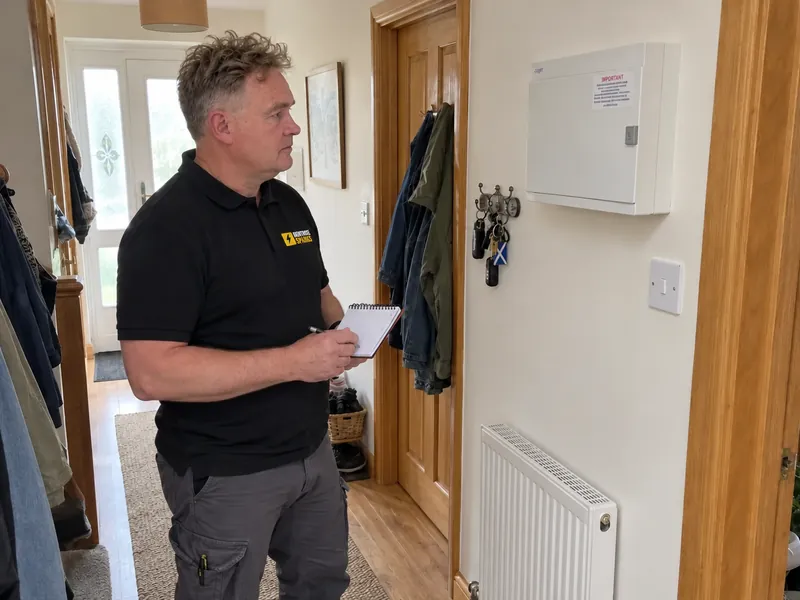
When to rewire
Does Your House Need Rewiring?
Not necessarily: an inspection, not the age of the house, decides. Wiring inside domestic properties can deteriorate over time. If your property has vulcanized rubber (VIR) cabling, lead-sheathed cables, damaged wiring, or lacks modern RCD protection, an inspection helps establish whether repairs, upgrades or rewiring are needed. Age or the absence of an RCD alone does not establish that a full rewire is necessary.
Deteriorating rubber insulation or lead-sheathed cables
Vulcanized rubber (VIR) cabling and lead-sheathed cables are the warning signs an inspection looks for first.
Green deposits at cable ends, damaged fittings or persistent tripping
An inspection establishes whether the installation needs targeted repairs, improvements or a full rewire; age alone does not determine the answer.
A vacant home, major renovation or refurbishment
The situations a full rewire suits best. A vacant property allows the job to be completed faster and with less daily disruption.
A new kitchen, loft conversion or extension
Specific high-demand rooms can be rewired on their own, integrating new cabling with your existing consumer unit and earthing system.
Full Rewire or Partial Rewire: Which Does Your Property Need?
Safe, BS 7671-compliant electrical rewiring comes in two scopes. Both are inspected, tested and certified; the difference is how much of the existing installation is replaced.
Option one
Full rewire
Replacing all concealed cables, backboxes, sockets, switches, light points, and consumer units across an entire property. Ideal for vacant homes, major renovations, or older properties undergoing refurbishment.
Best when: the property is vacant or being renovated anyway, or an inspection has found the existing wiring is deteriorating throughout.

Option two
Partial rewire
Rewiring specific high-demand rooms—such as kitchens, loft conversions, or home extensions—while safely integrating new cabling with your existing consumer unit and earthing system.
For a partial rewire, the certificate covers the stated work rather than certifying every unrelated part of the existing installation.
Best when: the rest of the installation is sound and only certain rooms or circuits need new cabling.
Which option applies is usually clear once James has inspected the cabling and the consumer unit. Interlinked smoke and heat alarms are fitted at second fix of a full rewire, so their positions can be planned with the rest of the cable routes; see Interlinked Smoke & Heat Alarms for what a Scottish home needs.

Period Property & Farmhouse Rewiring
Specialized rewiring for stone-built Angus cottages, historic Montrose properties, and rural farmhouses, using sympathetic cable routing to minimize disturbance to traditional plasterwork and timber features.

A new consumer unit as part of a rewire
A full rewire replaces the consumer unit along with the cabling. On a partial rewire, whether the existing board can take the new circuits is checked as part of the assessment.
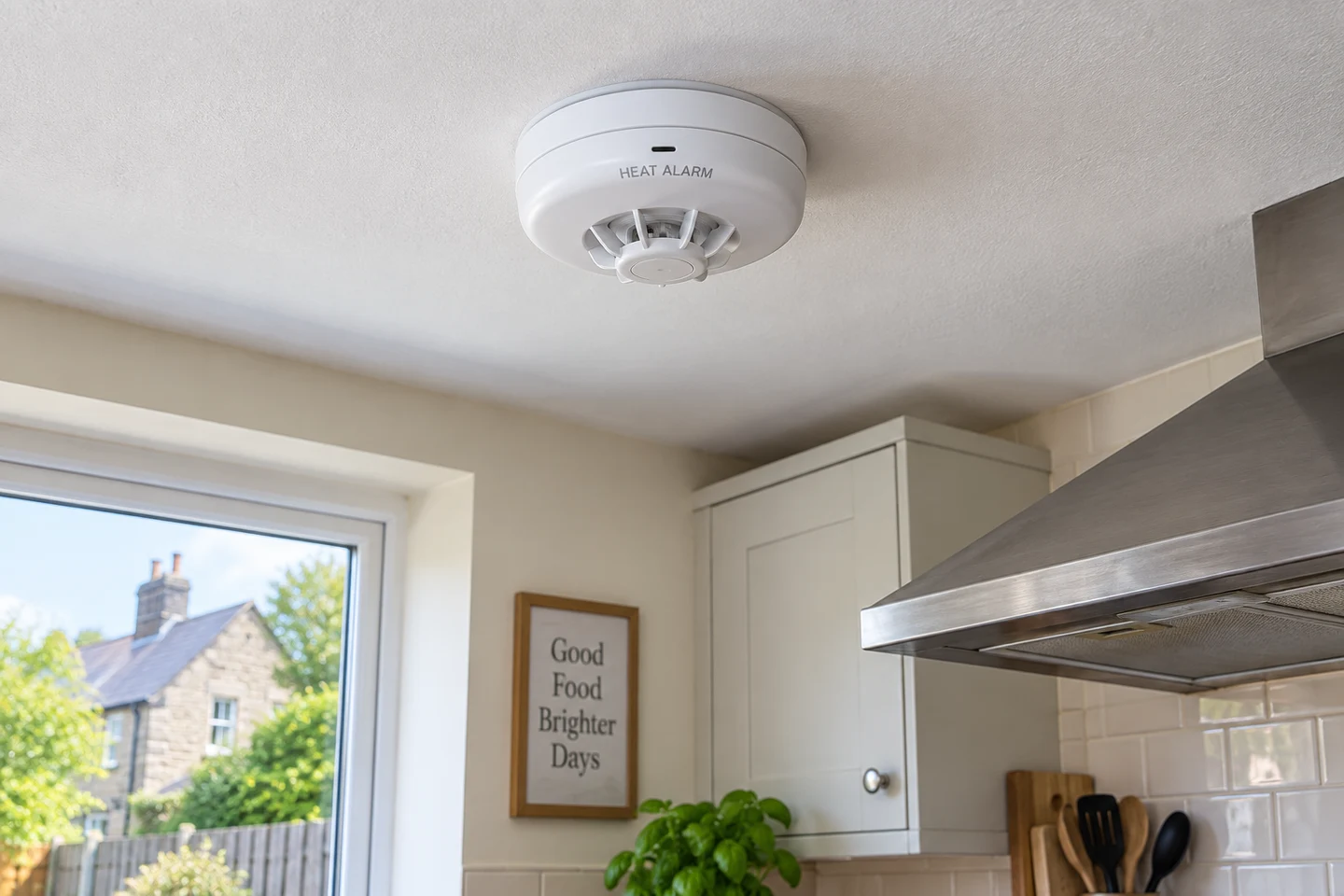
Smoke and heat alarms fitted during a rewire
Interlinked smoke and heat alarms are usually fitted at second fix, so their positions and cable routes can be planned with the rest of the work.
How Much Does a House Rewire Cost?
Rewiring prices depend on property size, whether the property is occupied or vacant, floorboard access, and wall construction (e.g., lath and plaster vs. plasterboard). All costs are agreed upon before work starts.
- Typical 1–2 Bed Property RewireOccupancy status, cable access, number of socket/light points. Quoted following an initial property survey or review of floor plans.
- £3,500 – £5,500+Typical 1–2 bed property
- Typical 3–4 Bed Property RewireNumber of storeys, wall materials, consumer unit specification. Share layout plans, intended socket positions, and project schedule.
- £5,500 – £8,000+Typical 3–4 bed property
- Partial / Single-Room RewireRoom size, existing board capacity, routing distance to main board. Assessed by reviewing existing consumer unit and room access.
- £900 – £2,500+Partial or single room
Indicative guide prices. The final scope and cost are agreed before work begins. Any building warrant and local authority requirements depend on the project and are agreed separately.
What Does a House Rewire Involve?
A full house rewire includes first fix, second fix, and final testing and certification:
- 1
Survey & Plan
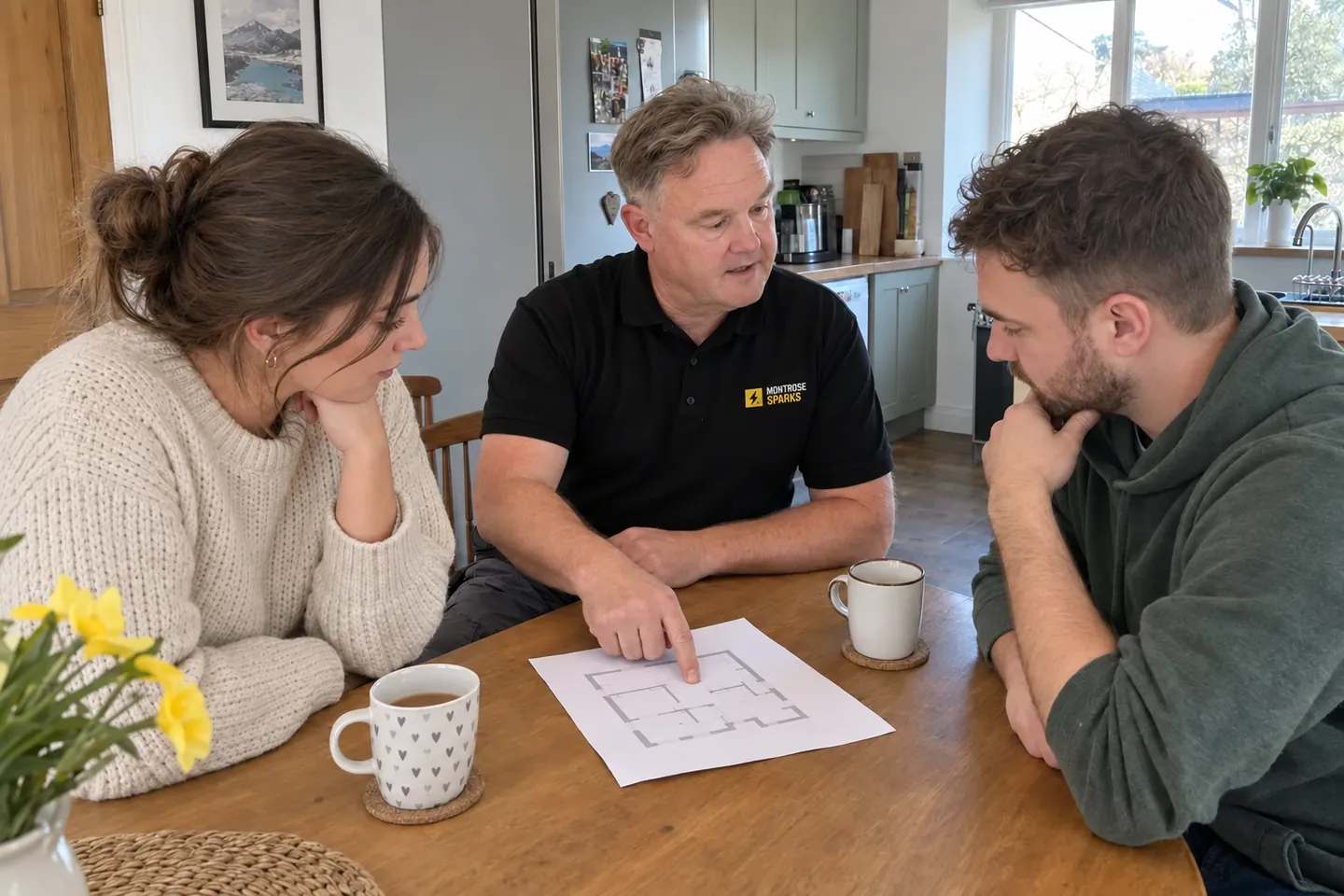
Walking the property to agree the intended socket, lighting and appliance positions, where the consumer unit will sit and how cables can be routed. The quote is prepared from this survey or a review of floor plans.
- 2
First Fix (Cabling & Backboxes)
Chasing walls, lifting floorboards, and routing new cables for power, lighting, heating, switches, and internet points back to the main consumer unit location. Which floors and walls are opened is agreed with you beforehand.
- 3
Consumer Unit & Circuit Connections
Fitting the consumer unit and terminating each new circuit at its own protective device. Main earthing and bonding are checked before the installation is energised.
- 4
Second Fix (Fittings & Accessories)
Installing faceplates, light fittings, consumer unit, switches, smoke alarms, and connectable appliances after plastering and decorating are complete.
- 5
Testing & Certification
Conducting the required BS 7671 inspection and testing and issuing an Electrical Installation Certificate (EIC). Any building warrant and local authority requirements depend on the project and are agreed separately.
If the existing installation is sound and you only need more points, that is usually a job for Extra Sockets rather than a rewire.
On completion
What you are left with
The certificate handed over when the work is signed off, and what it does and does not cover.
Electrical Installation Certificate (EIC)
Records the scope of the rewiring, inspection and test results. For a partial rewire, the certificate covers the stated work rather than certifying every unrelated part of the existing installation.
Building Warrant & Local Authority Requirements
Any building warrant and local authority requirements depend on the project and are agreed separately.
House Rewiring Across Montrose, Angus
Rewiring for older stone-built houses, farmhouses and rental properties. James is based in Montrose, Angus, Scotland, and covers the DD10 postcode district, the Angus towns and the Mearns within an approximate 40-mile radius. Give him your postcode to confirm availability.
- Montrose and DD10The town, Ferryden and Hillside, and up the coast to St Cyrus. Our base, so usually the quickest to arrange.
- Brechin and ForfarFull and partial rewires for homes, rentals and renovations across the Angus towns.
- ArbroathPeriod cottages and rural farmhouses, including surrounding rural properties.
- Laurencekirk and InverbervieEnquiries welcome for houses, flats and rented properties.
- Elsewhere in Angus and the MearnsDundee and Stonehaven are inside the approximate 40-mile service area. Call with your postcode to check coverage.
Frequently Asked Questions About House Rewiring
Can’t see your question?
James answers the phone himself and will tell you straight away whether he can help.
Call 01674 900550How do I know if my house needs a full rewire?
Warning signs include deteriorating rubber insulation, green deposits at cable ends, damaged fittings and persistent circuit tripping. An inspection establishes whether the installation needs targeted repairs, improvements or a full rewire; age alone does not determine the answer.
How long does it take to rewire a house?
A typical 3-bedroom house rewire takes between 5 to 10 working days, depending on whether the property is vacant or occupied during the work.
Do I need to move out during a rewire?
While work can be completed around occupants on a room-by-room basis, a vacant property allows the job to be completed faster and with less daily disruption.
Do I get official safety certificates after a rewire?
Yes. You receive an Electrical Installation Certificate (EIC) recording the scope of the rewiring, inspection and test results. For a partial rewire, the certificate covers the stated work rather than certifying every unrelated part of the existing installation.
Will a rewire include a new consumer unit?
Usually, on a full rewire. A full domestic rewire replaces the consumer unit along with the concealed cables, back boxes, sockets, switches and light points. On a partial rewire, whether the existing board has the capacity and protection for the new circuits is checked as part of the assessment, and a replacement is only proposed if it is needed. James confirms which applies once he has seen the board.
Can I rewire one room at a time?
Yes, where the rest of the installation is sound. Partial rewiring covers specific high-demand rooms, such as kitchens, loft conversions or home extensions, with the new cabling integrated with your existing consumer unit and earthing system, and work can be completed around occupants on a room-by-room basis. For a partial rewire, the certificate covers the stated work rather than certifying every unrelated part of the existing installation, so if an inspection finds the older cabling elsewhere is deteriorating, James explains that before you commit to a room at a time.
How do I know if my house has been rewired before?
The type of cable, the age of the consumer unit and any previous certificates are the usual clues. Modern PVC-insulated cable, a consumer unit with RCD or RCBO protection and an Electrical Installation Certificate from the earlier work suggest a rewire has been done; rubber-insulated or lead-sheathed cable, an old fuse box and no paperwork suggest it has not. None of these signs is conclusive on its own, and a property can have been rewired in part only. An inspection confirms the condition of the wiring, and James can advise once he has seen the installation.
Do I need to redecorate after a rewire?
Often, at least in part. First fix means chasing walls and lifting floorboards, so plaster and decoration are disturbed where cables are routed, and second fix is carried out after plastering and decorating are complete. Making good and who handles decoration are discussed when the quote is prepared; a vacant property, or one being renovated anyway, is the least disruptive time to rewire. James agrees the extent of any making good with you before work begins.
Get your rewiring quote
Tell James the size of the property, whether it is occupied or vacant and what you want rewired. Send floor plans or photos if you have them. Full rewires are quoted after an initial property survey or a review of floor plans.
James aims to reply within one hour, 8am–6pm.